
The Baptism of Jesus' Passion & Death
Twenty-second Sunday in Ordinary Time, Year C

(Audio recorded live, 31 August 2025)
Readings:
Sir. 3:17-18, 20, 28-29; Ps. 68; Heb. 12:18-19, 22-24a; Lk. 14:1, 7-14
Jesus says, “When you are invited by someone to a wedding banquet, do not recline at table in the place of honor,” and “When you hold a lunch or a dinner, do not invite your friends or your brothers or your relatives or your wealthy neighbors, in case they may invite you back and you have repayment.” These two imperatives are meant to teach us the importance of getting to know the bridegroom as well as how we ought to avoid shutting others out of our lives. The imagery of a wedding banquet is Biblical imagery of heaven. Many of the prophets used the imagery of a wedding feast to teach the people what is in store for those who love God and keep the covenant. They also insisted that the people care for widows and orphans, and the least of those in their midst. To that end, Jesus gives the second imperative about being careful not to invite people for the sake of being repaid in some other way. In other words, we are not to attach strings to our charity. Jesus says, “But when you give alms, do not let your left hand know what your right is doing, so that your almsgiving may be secret. And your Father who sees in secret will repay you” (Mt. 6:3-4).
St. Paul describes the Church as the threshold of heaven. He says, “[Y]ou have approached Mount Zion and the city of the living God, the heavenly Jerusalem, and countless angels in festal gathering, and the assembly of the firstborn enrolled in heaven, and God the judge of all, and the spirits of the just made perfect, and Jesus, the mediator of a new covenant, and the sprinkled blood that speaks more eloquently than that of Abel.” Once again, we have an image of the heavenly banquet, particularly the Eucharist, the blood which was shed for the forgiveness of sins. We all approach the threshold of heaven whenever we approach the altar at Mass. That is why there are steps leading up into the sanctuary. The nave of the church represents earth, while the elevated sanctuary represents heaven. The altar is Christ, for it is the very place where Christ becomes truly and substantially present to us. The Eucharist, therefore, becomes a foretaste of the heavenly banquet.
Are we worthy to receive the Eucharist? Have we gotten to know the bridegroom? Or have we committed grave sins against God or the Church? Have we failed to love our neighbor as ourself? Have we exercised humility as Jesus describes in the gospel? Or do we seek seats of honor and recognition? Have we let pride get the best of us?
It is a difficult temptation, pride. It makes us desire that which is disordered under the guise of having greater control or esteem. How does one have greater control by giving in to one’s sinful inclinations? Have we not rather lost control having given ourselves over to compulsion? When someone, for instance, becomes a compulsive liar, they lie so often they no longer realize they are lying, nor do they have a good grasp of the truth. In like manner, one who is prideful is concerned only with their own recognition. They become narcissistic, turning inward, and using those around them only to get ahead.
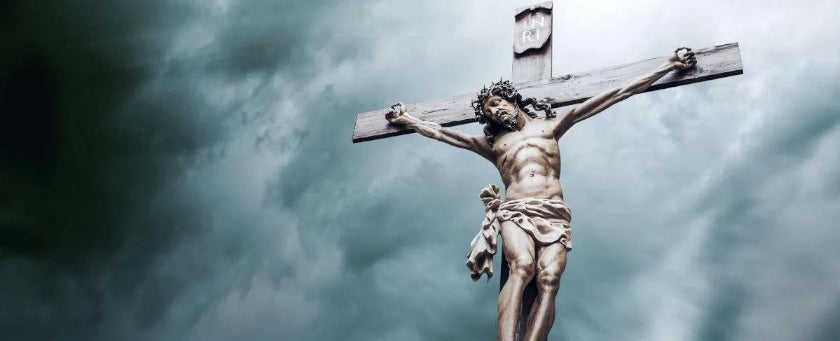
So often, we are tempted to give in to sin, but as baptized Catholics, we rise above it by the grace Christ. As St. Paul says, “I have been crucified with Christ; yet I live, no longer I, but Christ lives in me; insofar as I now live in the flesh, I live by faith in the Son of God who has loved me and given himself up for me” (Gal. 2:19b-20). But, what happens when we fail to live by faith in Christ? What happens when we give in to evil desires and put on not Christ, but sin? We find ourselves locked out of heaven because Christ will say, “I do not know where you are from. Depart from me, all you evildoers!” (Lk. 13:27).
This week, our country learned of this kind of evildoer at the shooting in Minneapolis. It is heartbreaking to discover that such an attack took place during a Catholic Mass. We pray for those who lost their lives, those who were injured, their families, and all affected. As people of faith, we are also people of hope that such violence can be prevented in the future. We are certainly doing everything we can to ensure our buildings are as safe and secure as possible, including applying for a grant from the New Jersey Office of Homeland Security and Prevention. Above all awareness is our best defense. If you see something, say something.
The letter to the Hebrews describes the Church as the threshold of heaven. In Minneapolis, the church of the Annunciation was that very threshold. Across the front of the building is etched the phrase, “This is the house of God and the gate of heaven.” Yes, evil was done in front of the gate of heaven, but as Jesus assures St. Peter, “And so I say to you, you are Peter, and upon this rock I will build my church, and the gates of the netherworld shall not prevail against it” (Mt. 16:18). Indeed every church is the gate of heaven because the Church is God’s dwelling on earth. And though two innocent lives were lost, they nevertheless gave their lives for Christ, like the Holy Innocents when Christ was born.
As people of communion, we are all connected, “Because the loaf of bread is one, we, though many, are one body, for we all partake of the one loaf” (1 Cor. 10:17). And so we are united in the one Christ. If one part of the body grieves, the whole body is affected. If one person gives in to sin, the whole body is affected. Let us then rise above evil desires, let us fight against temptation, let us act honorably as during the day, and not let darkness cloud our judgment. Let us instead go to Christ, who is our Light. And may the communion we share keep us focused on that which is above, humbling ourselves that we we may find favor with God.

Share this post
Twitter
Facebook
Pinterest
Email